Ellis Baumann · 24 October 2026
Poland's Faculty Workshops Spark Curriculum Shifts Toward Linked Academic Fields
Polish higher education institutions have ramped up faculty workshops that connect previously separate academic disciplines, and these sessions now drive measurable adjustments in course structures across multiple universities. Education ministry reports from 2025 detail how participants in these gatherings identify overlapping concepts between fields such as sociology and computational modeling, then translate those overlaps into revised syllabi that require students to complete joint projects spanning both areas.
Workshop Formats and Participation Trends
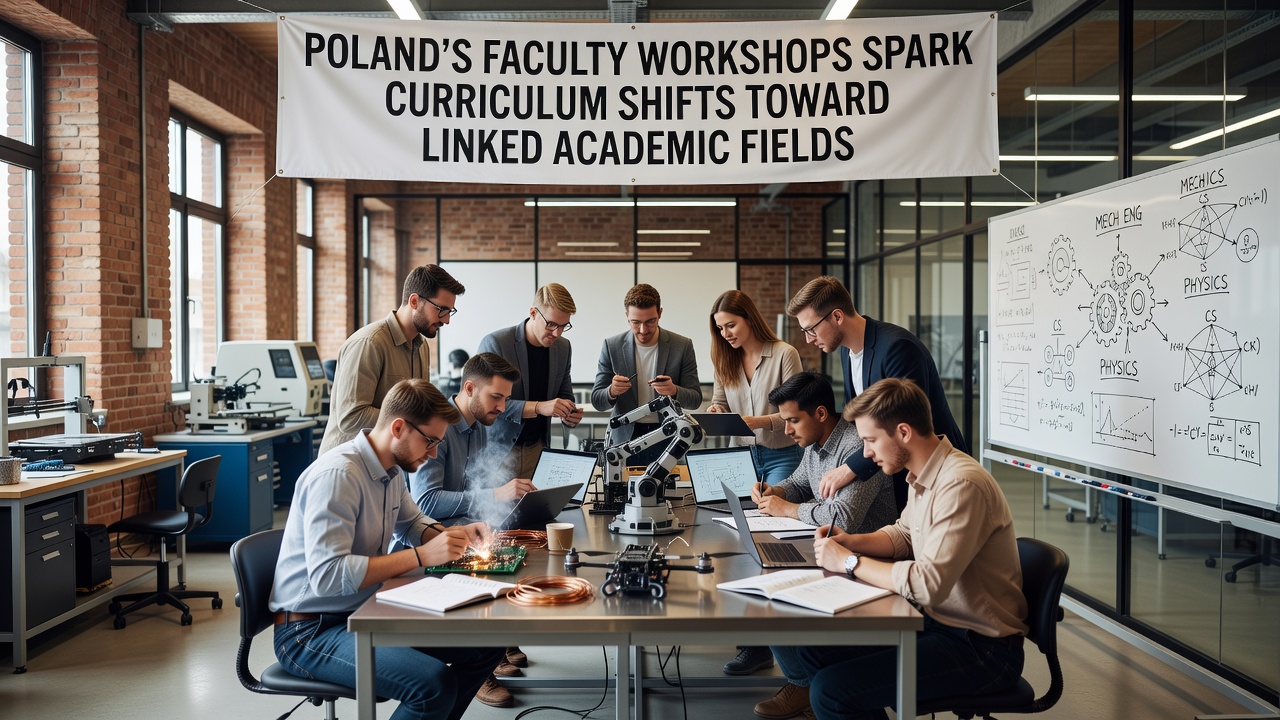
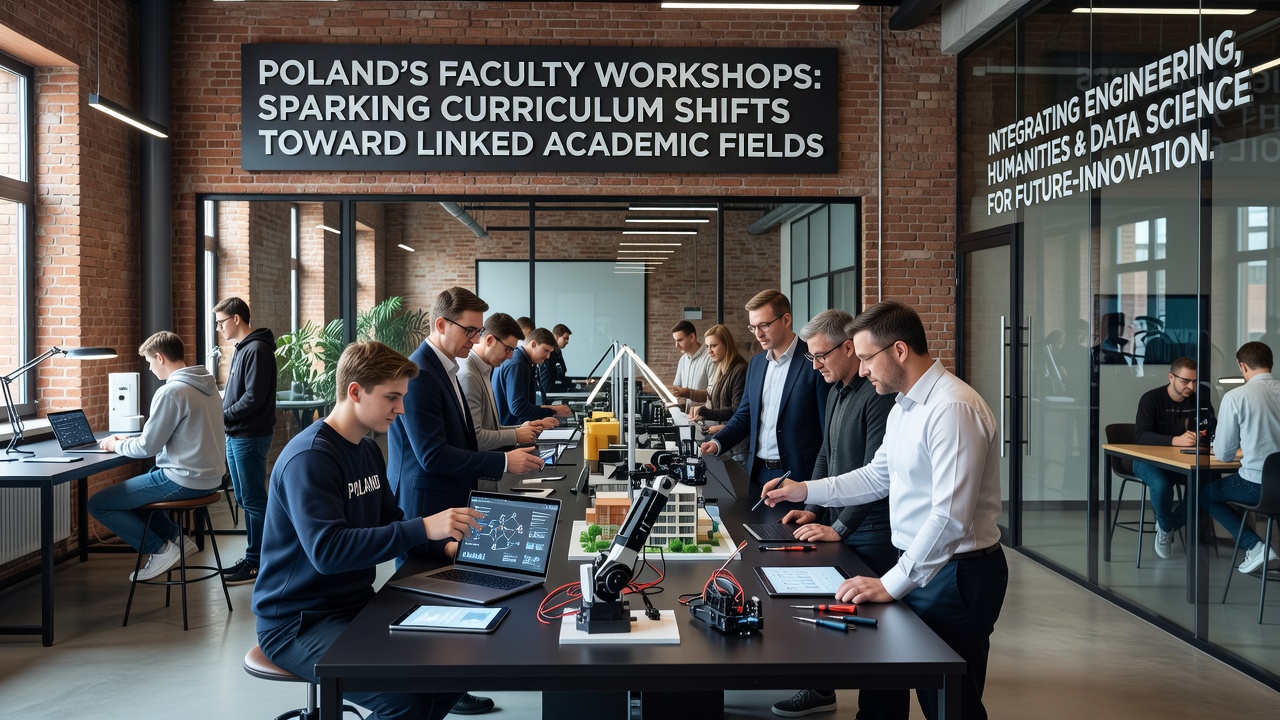
Organizers schedule multi-day events where instructors from distinct departments review case studies together, and attendance records show steady growth with over 1,200 faculty members taking part in 2025 sessions hosted in Kraków, Wrocław, and Gdańsk. The Polish Ministry of Education and Science tracks registration data that reveals humanities lecturers now comprise nearly 40 percent of attendees, up from 22 percent two years earlier, while engineering and natural science faculty fill the remaining seats. Sessions typically begin with shared presentations on methodological parallels, after which small groups draft sample modules that merge qualitative analysis techniques with quantitative data pipelines.
Curriculum Adjustments Documented in 2026
By October 2026 several institutions plan to roll out updated degree requirements that embed these workshop outputs directly into core sequences, and internal reviews already confirm that at least eight universities have approved new cross-listed electives for the upcoming academic year. One documented change involves philosophy departments incorporating data ethics modules developed jointly with computer science teams, so students examine algorithmic bias through both ethical frameworks and code audits within the same course. Another adjustment appears in environmental science programs that now include social impact assessments drawn from anthropology methods, with instructors citing workshop materials as the direct source for the revised assessment rubrics.
Funding Mechanisms and Institutional Support
National and European Union grants cover most workshop logistics, with allocations listed in the 2024-2027 operational program for education that earmarks resources specifically for interdisciplinary training events. University administrators report that departments receive small implementation stipends once they submit curriculum revision proposals based on workshop findings, and disbursement records indicate 67 proposals cleared review in the first half of 2025. The European Commission maintains a public database of these funded activities, and observers note that Polish submissions emphasize measurable learning outcomes such as joint thesis supervision rates rather than abstract goals.
Early Indicators from Enrollment and Faculty Feedback
Registration figures for the revised courses show initial uptake, with combined-enrollment classes filling to 85 percent capacity in pilot runs during the 2025-2026 winter semester. Faculty surveys conducted after the first round of workshops record that 78 percent of participants implemented at least one new assignment linking their original field to another discipline, and follow-up questionnaires distributed three months later confirm sustained use of those materials. Institutional research offices compile these numbers alongside standard performance metrics, allowing direct comparison of student completion rates before and after the changes.
Broader Patterns Across Regions
Similar workshop models appear in neighboring countries, yet Polish organizers have adapted the format to local accreditation rules that require explicit documentation of cross-field competencies. Data compiled by the Conference of Rectors of Academic Schools in Poland tracks how many departments now list joint learning objectives in their official program descriptions, and the count rose from 14 departments in 2023 to 51 by mid-2025. These shifts remain confined to elective and capstone components at most institutions, though planners in October 2026 intend to test full integration within selected bachelor's tracks.
Conclusion
Faculty workshops continue to serve as the primary mechanism for identifying and formalizing links between academic fields in Polish universities, with documented curriculum updates already in motion for 2026 and beyond. Participation metrics, grant records, and early enrollment data together illustrate a steady progression from discussion sessions to structural changes in degree requirements. The pattern suggests that additional institutions will adopt comparable approaches as workshop outputs accumulate and accreditation bodies review the resulting program modifications.