Ellis Baumann · 21 November 2026
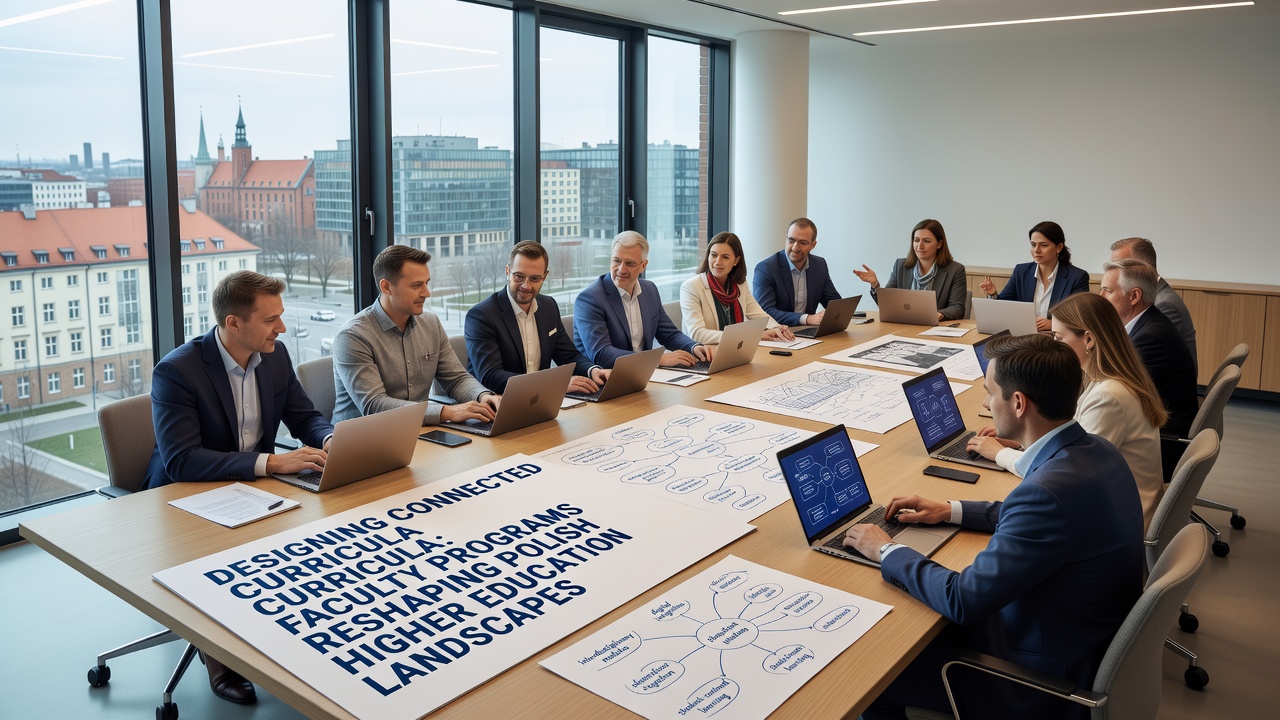
Faculty Programs Drive Curriculum Connectivity in Polish Universities
Polish higher education institutions have expanded faculty-led initiatives that link courses across disciplines, and data from the Ministry of Science and Higher Education shows increased enrollment in these integrated programs since 2023. Researchers at several universities document how these efforts connect traditional fields such as biology and engineering with digital humanities and environmental policy, creating pathways that allow students to move between subjects without losing credit hours. Observers note steady growth in joint course offerings that span multiple departments, and figures from the European Education and Culture Executive Agency indicate that Poland received targeted funding allocations for such projects under the Erasmus+ framework.
Background on Curriculum Integration Efforts
Universities across Poland began piloting connected curricula models in the early 2020s, building on earlier reforms that aligned national standards with the Bologna Process. Faculty teams at institutions in Kraków, Wrocław, and Gdańsk formed working groups that reviewed overlapping course content and identified shared learning outcomes. Studies from the OECD's education directorate highlight how these reviews reduced redundant requirements and allowed students to combine credits from humanities and technical tracks. In November 2026, several regional conferences are scheduled to review preliminary outcomes from the latest funding cycle, with reports expected to detail completion rates and graduate placement data.
Administrative records reveal that over 120 faculty members participated in structured workshops during the 2024-2025 academic year, and participation numbers continued to rise into 2026. These sessions focused on mapping competencies across subjects, and participants developed sample syllabi that combine quantitative methods with qualitative analysis. According to internal university reports, the approach has led to new minor concentrations that students can complete alongside primary degrees.
Key Components of Faculty-Led Programs
Faculty programs emphasize three main elements: shared assessment frameworks, cross-listed electives, and collaborative capstone projects. Teams design rubrics that apply across departments, so students receive consistent feedback whether they work on a physics simulation or a policy brief. Cross-listed electives allow enrollment from multiple majors, and capstone projects require input from advisers in different fields. Data collected by the Polish Rectors Conference shows that institutions adopting these elements report higher student retention figures compared with traditional single-track programs.
Examples from Regional Institutions
One case at a Silesian technical university involved biology and data science departments creating a joint module on environmental modeling. Faculty members aligned laboratory exercises with statistical analysis courses, and students presented findings at a combined symposium. Similar arrangements appear at universities in the Pomerania region, where history and computer science instructors co-developed courses on digital archives. European Union monitoring reports track these developments and note alignment with broader goals for skills development outlined in the European Skills Agenda.

Additional programs link philosophy and economics through courses on ethical data use, and faculty coordinators track how these connections influence thesis topics. University statistics indicate that graduates from these linked programs often pursue roles requiring both domain knowledge and analytical skills. Reports from the Australian Department of Education, Skills and Employment provide comparative context, noting parallel trends in curriculum design among institutions that adopted cross-faculty models.
Impact on Student Pathways and Institutional Structures
Enrollment data from the 2025 admissions cycle shows increased interest in flexible degree combinations, and advisors report that students cite curriculum connectivity as a deciding factor. Institutional changes include revised promotion criteria that recognize collaborative teaching, and department budgets now allocate resources for joint course development. Research published by the European University Association documents shifts in faculty workload distribution that accommodate these new structures.
Challenges remain in aligning accreditation requirements across fields, yet working groups continue to refine documentation processes. November 2026 workshops will address remaining gaps in credit transfer protocols, and organizers expect input from both national and international partners. Figures from national surveys indicate steady improvement in student satisfaction scores related to course relevance.
Future Developments and Ongoing Monitoring
Plans for 2027 include expanded use of digital platforms that track student progress across connected courses, and pilot testing is underway at select sites. Government funding announcements project continued support through national recovery funds tied to education modernization targets. Observers expect further data releases that will measure long-term outcomes such as employment rates and advanced degree enrollment among participants in these programs.
Conclusion
Polish faculty programs continue to reshape higher education by linking academic fields through deliberate curriculum design. Evidence from enrollment trends, funding reports, and institutional records shows measurable expansion of these models, with additional reviews planned for late 2026. External sources such as the OECD and the European Education and Culture Executive Agency supply comparative benchmarks that place these developments within broader European patterns of educational reform.